Most organizations today are surrounded by data. Every platform, system, and interaction generate information meant to support better decisions. Yet, despite having access to more data than ever before, many teams struggle to answer simple questions about performance, impact, and direction. The issue is not data availability, but how scattered that data has become.
Over time, analytics environments evolve organically. New tools are introduced to solve immediate problems; teams adopt platforms that suit their needs, and reporting grows in silos. Whereas marketing data, operational data, and financial data often live in separate systems. While each system functions well independently, together they create complexity. Insights become harder to surface, analysis slows down, and decision-making becomes more reactive rather than strategic.
Why Fragmented Data Slows Decision-Making
When data is fragmented, analytics becomes a manual process. Teams spend hours downloading reports, navigating CSV files, reconciling metrics, and validating numbers across dashboards. Instead of focusing on insights, they focus on mechanics. By the time analysis is complete, the opportunity to act has often passed.
This fragmentation creates friction not just for data teams, but also for business users. Leaders are forced to rely on delayed reports or partial views of performance. Without a single, trusted source of truth, confidence in data decreases, and decisions are often driven by intuition rather than evidence.
The Need for Unified Insights
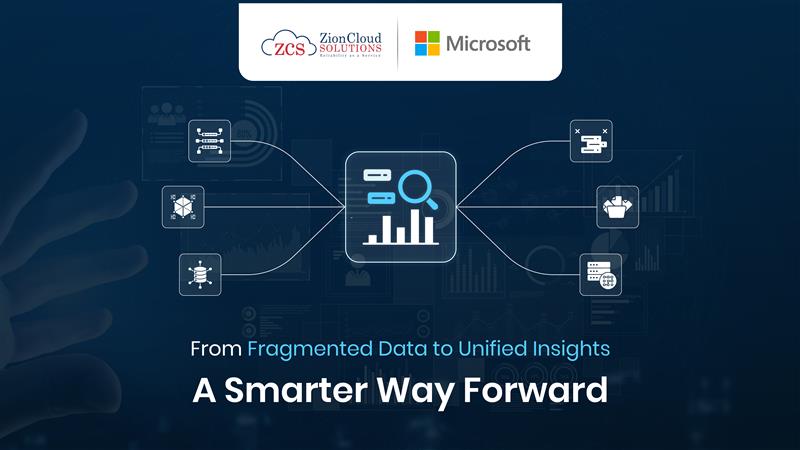
Unified insights change how organizations work with data. Rather than piecing together information from multiple systems, teams operate from a shared foundation. Data is connected, analytics is consistent, and insights are easier to interpret.
When analytics is unified, the conversation shifts from “Where did this number come from?” to “What does this mean for the business?” Teams can focus on understanding trends, measuring impact, and planning the next steps. This clarity is critical in fast-moving environments where timely decisions make a real difference.
The Shift Toward Unified Analytics Platforms
Traditional analytics stacks were built over time, often without a long-term integration strategy. While these stacks addressed individual needs, they introduced complexity at scale. Maintaining multiple tools, pipelines, and dashboards became costly and inefficient.
This has led many organizations to rethink their approach and move toward unified analytics platforms. These platforms are designed to bring data ingestion, transformation, analysis, and visualization together in one place. The goal is not just consolidation, but simplification, reducing the effort required to turn data into insight.
Microsoft Fabric is a response to this shift.
How Microsoft Fabric Brings Data Together
Microsoft Fabric is an end-to-end analytics platform that integrates data engineering, analytics, and business intelligence into a single experience. At its core is OneLake, a unified data foundation that allows data from different sources to live in one place.
By working from a common data layer, teams no longer need to move data between systems or manage complex integrations. Analytics workflows become simpler, more consistent, and easier to govern. Fabric also integrates seamlessly with Power BI, enabling insights to flow naturally from data to visualization.
This unified approach reduces duplication, improves trust in data, and accelerates time to insight.
Turning Data into Actionable Insight
One of the biggest challenges organizations faces is not a lack of metrics, but too many of them. Dashboards filled with numbers can overwhelm users rather than guide them. Unified insights are focused, surfacing the metrics that matter most and presenting them in a way that supports decision-making.
With a unified analytics platform, organizations can define the measures that drive strategy and performance. Instead of navigating raw data, teams can see the impact of their actions, understand what is working, and identify where adjustments are needed. Analytics becomes a decision-support tool rather than a reporting exercise.
Building a Foundation for Advanced Analytics and AI
As organizations explore predictive analytics and AI-driven insights, data fragmentation becomes an even bigger barrier. Advanced models require clean, consistent, and timely data. When data is spread across systems, building reliable models becomes difficult.
Unified analytics platforms like Microsoft Fabric provide the foundation needed for advanced use cases. With data centralized and governed consistently, teams can experiment, iterate, and scale analytics initiatives with confidence. The result is not just better analytics today, but readiness for future innovation.
A Smarter Way Forward
The journey from fragmented data to unified insights is both a technical and strategic transformation. It starts with understanding where data lives today, how it is used, and where friction exists. From there, organizations can simplify their analytics environment and align teams around shared insights.
Microsoft Fabric supports this journey by reducing complexity and enabling analytics that are easier to use, easier to trust, and easier to scale. It allows organizations to move faster, think more clearly, and act with confidence.
In a world where speed and clarity are competitive advantages, unified insights are no longer optional. Moving fragmented data is not just a smarter way forward; it is the path to more informed, impactful decision-making.
Wrapping Up
Fragmented data doesn’t just slow analytics; it slows decisions. When insights are scattered across systems, teams spend more time interpreting data than acting on them. Moving a unified analytics approach is no longer optional for organizations that want clarity, speed, and confidence in decision-making.
Microsoft Fabric provides a powerful foundation to bring data together and simplify analytics, but real value comes from applying it in the right way for your business. Zion Cloud Solutions helps organizations approach this transition thoughtfully starting with discovery, aligning analytics to business goals, and implementing Microsoft Fabric in a way that delivers practical, actionable insights.
Therefore, if your current analytics setup feels complex or disconnected, ZCS can help you take the first step toward unified analytics; from assessing your existing data landscape to building a scalable Fabric-based solution that supports smarter decisions today and future growth tomorrow.