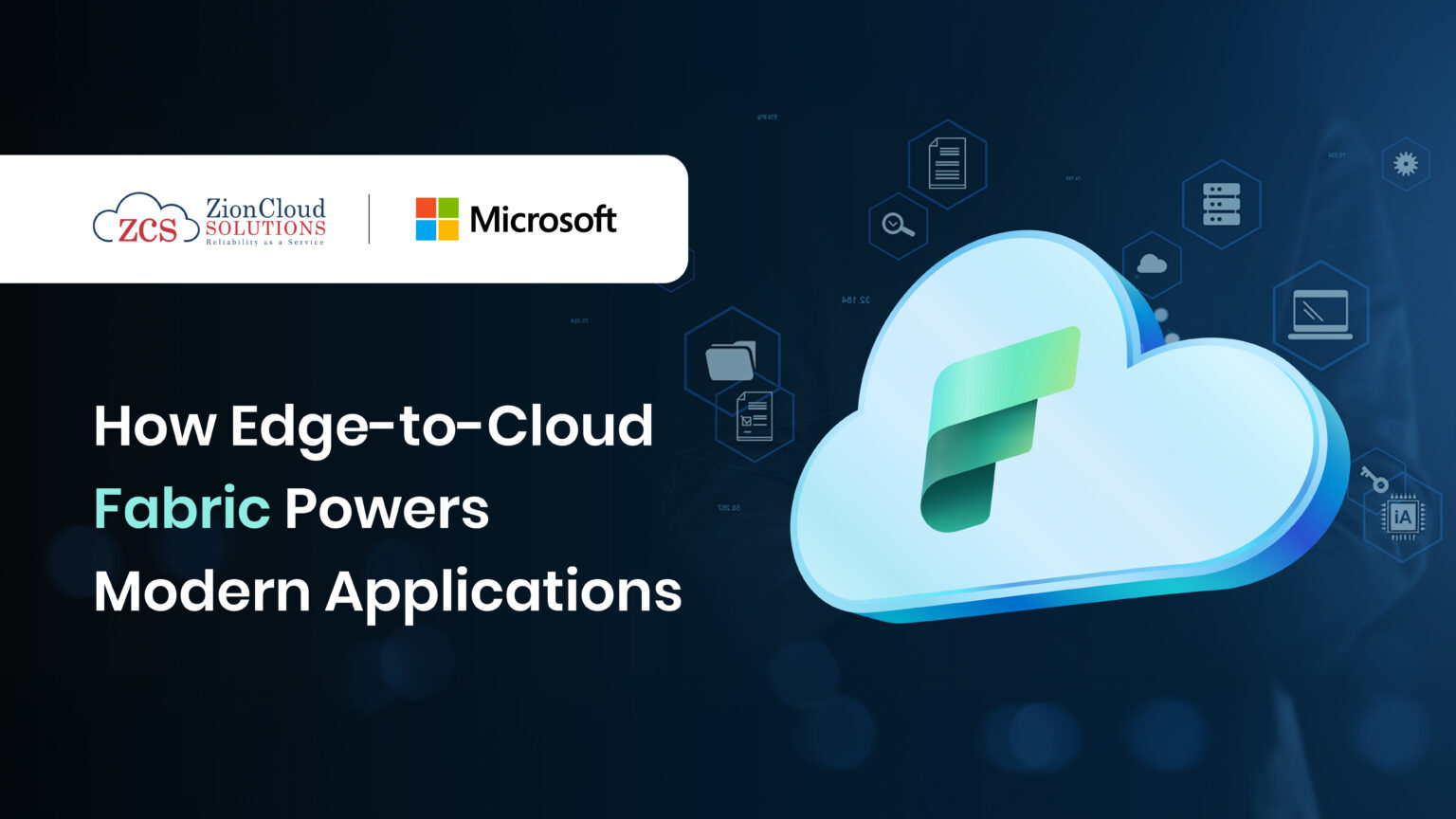
How Edge-to-Cloud Fabric Powers Modern Applications
Modern applications no longer sit quietly inside a single data center or depend entirely on the cloud. They live across smartphones, sensors, remote branches, multi-cloud platforms, and everything in between. Users expect instant responses, uninterrupted experiences, and intelligent features, no matter where they are or what device they use.
This rising expectation has made it clear that the traditional cloud-only model cannot support the speed and intelligence required today. This is where the edge-to-cloud fabric enters the picture, offering a powerful, unified framework that seamlessly connects the entire digital ecosystem.
What Edge-to-Cloud Fabric Really Means
Edge-to-cloud fabric is more than a technology trend; it’s an architecture that brings together data, applications, workloads, and infrastructure under one consistent environment. Instead of treating edge and cloud as separate entities, the fabric creates a continuous pathway where data flows securely and intelligently between them. It acts like a digital nervous system; fast, responsive, and deeply interconnected. Allowing businesses to operate with greater speed and precision.
This fabric ensures that data is processed where it makes the most sense. When milliseconds matter, processing happens at the edge. When deep insights or long-term analytics are needed, the cloud takes over. Through this balanced approach, modern applications become smarter and more efficient without compromising on performance.
Why Modern Applications Depend on It
Today’s applications demand instant reactions. Whether it’s a self-checkout kiosk, a factory robot, or a health monitoring device, delays can disrupt the experience or even put people at risk. Processing data at the edge eliminates unnecessary latency and keeps applications consistently fast.
But immediate responsiveness alone is not enough. Data still needs to be synchronized with analytical engines, AI platforms, and larger systems in the cloud. The edge-to-cloud fabric creates the bridge that keeps everything connected without slowing anything down.
Cloud-Like Agility Everywhere
One of the greatest advantages of cloud computing is its ability to scale effortlessly. The edge-to-cloud fabric extends that agility across all environments. Developers can build modern applications once and deploy them anywhere on the edge, in a private data center, or across public clouds without rewriting code or adjusting configurations.
This consistency accelerates innovation and supports global expansion. When demand spikes, when new features roll out, or when new locations open, the fabric ensures that the digital experience remains uniform, stable, and high-performing.
Stronger, End-to-End Security
As data moves across more locations, the need for consistent security grows. The edge-to-cloud fabric applies the same security principles everywhere, ensuring that data is encrypted, authenticated, and monitored at every stage. It supports a zero-trust model, where every connection must be verified before access is granted.
This reduces vulnerabilities that often arise when edge and cloud environments operate in isolation. By treating the entire ecosystem as one unified security domain, businesses gain greater protection and faster threat detection.
How the Fabric Transforms Application Experiences
Modern edge-to-cloud systems increasingly rely on artificial intelligence to optimize everything from traffic routing to workload placement. The architecture predicts failures before they happen, reallocates resources automatically, and ensures that applications perform consistently even during unexpected spikes in demand.
This built-in intelligence turns infrastructure into something more dynamic and self-reliant, reducing operational complexity and improving reliability across the board.
A Unified Operational View
For IT teams, managing distributed applications across different locations can become overwhelming. The edge-to-cloud fabric simplifies this by offering a unified, end-to-end view of the entire environment. Performance, security, data flow, compliance, and user experience can all be monitored from a single centralized dashboard.
This level of visibility helps teams respond faster, optimize more effectively, and troubleshoot issues long before they affect users.
The Future of Application Architecture
Looking ahead, it’s clear that the volume of data produced at the edge will only continue to grow. Analysts predict that a majority of enterprise data will be created and processed outside traditional data centers in the near future. This means the reliance on edge-to-cloud fabric will deepen as businesses adopt more AI-driven systems, connected devices, and immersive digital experiences.
Organizations that embrace this architecture now will gain the flexibility, speed, and intelligence needed to build applications that stand out in a competitive digital landscape.
Conclusion
Edge-to-cloud fabric is reshaping how modern applications are built, deployed, and experienced. It creates a world where data moves intelligently, applications respond instantly, and innovation becomes a continuous cycle.
For businesses aiming to deliver high-performing, secure, and scalable digital experiences, this architecture is no longer optional, it is essential. As the digital ecosystem continues to evolve, the edge-to-cloud fabric will serve as the foundation that enables the next generation of smart, connected, and future-ready applications.
If you’re curious about where the future of technology is headed, the edge-to-cloud journey is an exciting place to watch and an even more exciting space to grow into when the time feels right.