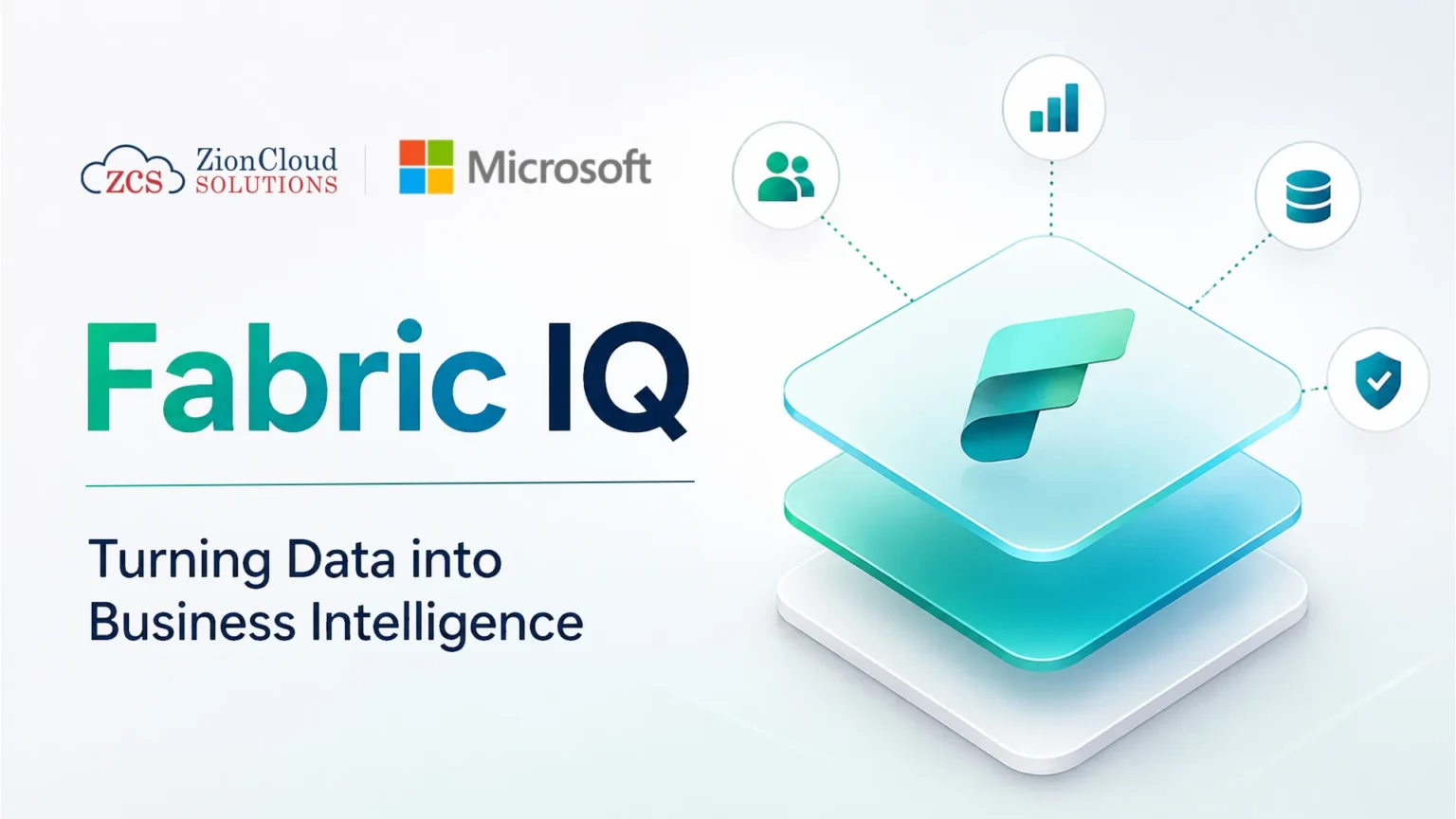
Fabric IQ: Transforming Business Intelligence with Smarter Data Experiences
Data has become the foundation of modern business. Every customer interaction, website visit, transaction, support request, and operational process generates information that organizations can use to drive growth. Yet despite having access to more data than ever before, many businesses continue to face a familiar challenge: transforming that information into meaningful business intelligence.
The problem is no longer data scarcity. In fact, most organizations are overwhelmed by the volume of information flowing through their systems every day. Dashboards are packed with metrics, reports are generated continuously, and databases grow larger by the minute. However, having access to data does not automatically create understanding. Without context, data remains a collection of numbers rather than a source of business value.
As organizations accelerate their digital transformation journeys, the need for intelligent data experiences has become more critical than ever. Leaders need answers quickly. Teams need insights they can trust. Decision-makers require a complete picture of the business without spending hours searching across multiple systems.
This shift is driving the next evolution of business intelligence, and Fabric IQ is at the center of that transformation.
What Is Fabric IQ?
Built within the Microsoft Fabric ecosystem, Fabric IQ helps organizations bridge the gap between raw data and actionable intelligence. Rather than simply presenting information through dashboards and reports, it enhances how users discover, understand, and interact with enterprise data.
The result is a smarter approach to analytics—one that focuses not only on what the data says, but what it means for the business.
The Growing Challenge of Enterprise Data
The modern enterprise runs on data generated from countless sources. Sales teams rely on CRM platforms to track customer relationships. Marketing departments use campaign management tools to measure engagement. Finance teams depend on accounting systems for forecasting and reporting. Operations teams monitor supply chains, inventory levels, and performance metrics through specialized applications.
While each system serves a specific purpose, the result is often a fragmented data landscape. Information becomes scattered across departments, platforms, and databases, making it difficult to create a unified view of business performance.
This fragmentation creates several challenges. Employees spend valuable time searching for information. Analysts dedicate hours to combining datasets. Leaders struggle to obtain consistent answers from different reports. Most importantly, organizations risk making decisions based on incomplete or outdated information.
Fabric IQ addresses this issue by helping organizations connect data more effectively within a unified environment. Instead of treating information as isolated assets, it enables businesses to create a more connected intelligence ecosystem where insights can be discovered faster and understood more clearly.
Moving Beyond Traditional Business Intelligence
For years, business intelligence solutions focused primarily on reporting. Dashboards provided visibility into key metrics, while reports offered snapshots of organizational performance. Although these tools remain valuable, modern businesses require more than static visualizations.
Today’s leaders are not simply asking what happened. They want to understand why it happened, what impact it may have, and what actions should be taken next.
Fabric IQ supports this shift by adding greater context to data exploration. Rather than forcing users to navigate through multiple reports and datasets, it helps create connections between business information, making insights easier to uncover and interpret.
Imagine a company experiencing a decline in customer retention. A traditional dashboard might highlight the decrease in customer numbers. However, understanding the underlying reasons often requires deeper investigation across sales, support, product usage, and customer feedback data.
An intelligent data experience allows decision-makers to move beyond surface-level metrics and uncover relationships that may otherwise remain hidden. This ability to connect information across business functions creates a more complete understanding of organizational performance and enables faster, more informed decision-making.
The Rise of AI-Powered Business Intelligence
Artificial intelligence is reshaping nearly every aspect of business operations, and analytics is no exception. Organizations are increasingly looking for ways to leverage AI not only to automate tasks but also to enhance decision-making.
In 2026, one of the most significant trends in business intelligence is the movement toward AI-assisted data exploration. Employees no longer want to spend hours navigating complex dashboards or waiting for specialized reports. They expect data platforms to provide answers quickly, intuitively, and in a way that aligns with how they work.
Fabric IQ aligns with this evolution by creating a more intelligent relationship between users and their data. Instead of relying solely on technical expertise, organizations can empower a wider range of employees to access insights and contribute to data-driven decision-making.
This democratization of analytics is becoming a key competitive advantage. Businesses that make data accessible to everyone, not just analysts and data scientists, are often able to respond faster to market opportunities and operational challenges.
Delivering Business Context, Not Just Data
One of the biggest limitations of traditional analytics platforms is their inability to understand business context.
A chart showing declining sales may indicate a problem, but it does not explain the broader business implications. Similarly, an increase in operational costs may be influenced by multiple factors that are not immediately visible within a single report.
Context transforms data into intelligence.
Fabric IQ helps organizations focus on business meaning rather than isolated metrics. By creating stronger relationships between data assets, business processes, and organizational objectives, it enables users to gain a clearer understanding of what their data is truly telling them.
This contextual intelligence is particularly valuable in complex organizations where decisions often involve multiple departments and interconnected processes. By reducing the effort required to uncover relationships between datasets, businesses can accelerate decision-making and improve strategic alignment.
Empowering Self-Service Analytics
Another major trend shaping the future of business intelligence is self-service analytics.
Organizations are generating more data than centralized analytics teams can reasonably manage alone. As demand for insights continues to grow, businesses need a model that enables employees across departments to access information independently while maintaining governance and accuracy.
Fabric IQ supports this shift by simplifying how users interact with enterprise data. Employees can spend less time searching for answers and more time applying insights to solve business problems.
This capability is especially important in today’s fast-moving environment. Market conditions can change rapidly. Customer expectations continue to evolve. Competitive pressures demand quicker responses than ever before.
Organizations that empower employees with timely access to reliable intelligence are better positioned to adapt, innovate, and grow.
Building Trust Through Unified Data
Trust remains one of the most important components of any successful analytics strategy.
No matter how advanced a platform may be, its value is limited if users question the accuracy or reliability of the information it provides. Decision-makers need confidence that they are working with trusted, governed, and consistent data.
One of the strengths of Microsoft Fabric is its ability to bring together data management, analytics, governance, and intelligence within a single ecosystem. Fabric IQ benefits from this unified foundation, helping organizations maintain strong governance standards while improving accessibility and usability.
This balance between trust and accessibility is increasingly important as businesses expand their use of AI and advanced analytics. Reliable insights depend on reliable data, and organizations that prioritize data quality are better equipped to generate meaningful business outcomes.
The Future of Data-Driven Organizations
The future of business intelligence is not about creating more dashboards. It is about creating smarter experiences that help people understand their business more effectively.
Organizations are moving toward a model where data is accessible, contextual, and intelligent. Instead of spending time gathering information, employees can focus on interpreting insights and taking action. Instead of reacting to events after they occur, leaders can make proactive decisions based on a deeper understanding of business performance.
This transformation is redefining what it means to be a data-driven organization.
Fabric IQ represents a significant step forward in this evolution. By combining the power of Microsoft Fabric’s unified platform with intelligent data discovery and business context, it enables organizations to unlock greater value from their information assets.
In a world where competitive advantage increasingly depends on the ability to make informed decisions quickly, organizations need more than data. They need intelligence. They need context. They need solutions that help connect information to business outcomes.
Conclusion
As businesses continue to navigate an increasingly data-rich environment, the ability to transform information into actionable intelligence has become a defining factor for success. Traditional reporting alone is no longer enough to support the speed, complexity, and demands of modern decision-making. Organizations need solutions that connect data, business context, and AI-driven insights into a unified experience.
Fabric IQ addresses this challenge by helping businesses move beyond simply viewing data and toward truly understanding it. By enabling smarter data discovery, contextual intelligence, and more accessible analytics, it empowers teams to make faster, more confident decisions.
As the future of business intelligence becomes increasingly intelligent, collaborative, and AI-powered, Fabric IQ is helping organizations unlock the full potential of their data and turn information into measurable business value.