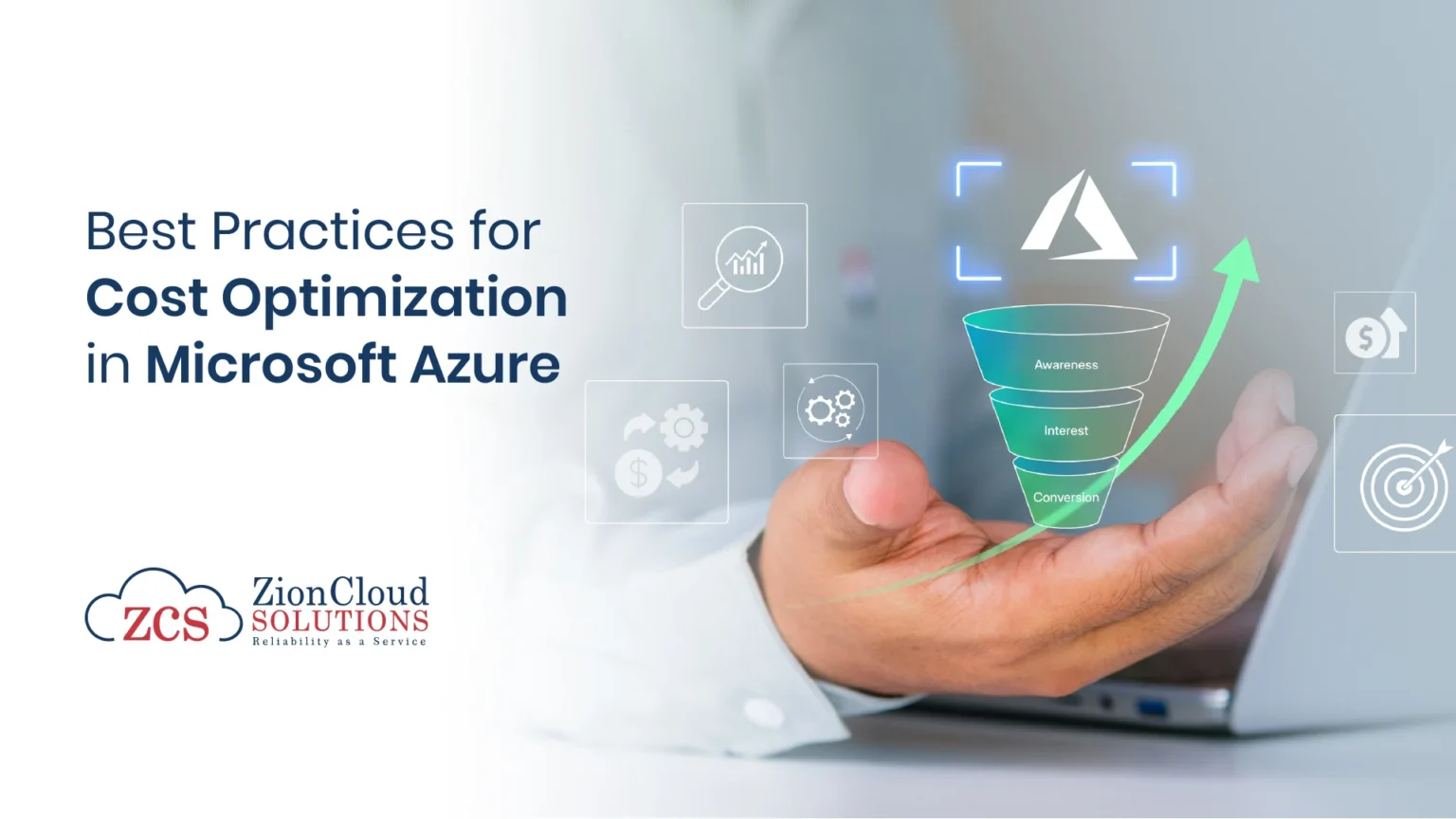
Cost Optimization in 2025: Why Cloud Spend Became a Boardroom Topic
By 2025, cloud cost optimization had moved well beyond engineering teams. CFOs, CIOs, and business leaders were actively involved in cloud spend discussions not because cloud was failing, but because cloud costs had become highly visible and directly tied to business performance.
Across enterprise engagements we supported at ZCS, we noticed a consistent pattern:
organizations did not struggle with using Microsoft Azure, they struggled with operating it economically at scale.
Cost overruns were rarely caused by the platform itself. They were the result of unclear ownership, weak governance, and migration decisions made without long-term financial models.
This blog outlines the practical cost optimization practices we implemented, refined, and institutionalized for enterprises operating on Microsoft Azure in 2025.
Reframing Cost Optimization as an Operating Model, Not a Cleanup Task
One of the biggest mistakes enterprises made early on was treating cost optimization as a post-migration activity.
By the time cost reviews were triggered:
- Architectures were already locked
- Teams had grown accustomed to over-provisioning
- Business units lacked accountability for consumption
Our first step was always to reframe cost optimization as an operating discipline, embedded into how cloud environments were designed, deployed, and governed.
Azure provided the visibility, but the behavioral shift had to come from how organizations worked.
Establishing Clear Financial Ownership Across Cloud Environments
In nearly every engagement, cost inefficiencies traced back to one issue: no clear owner for cloud spend.
We worked with enterprises to:
- Map subscriptions to business units or product lines
- Define accountable owners for each cost center
- Align cloud spend reporting with financial structures
Once ownership was clear, cost conversations became productive rather than reactive. Azure’s cost data became actionable because it was tied to real accountability.
Designing for Cost Before Migration, Not After
Many cost problems originated during migration design, long before workloads ever ran in Azure.
We introduced pre-migration cost modeling that evaluated:
- Expected steady-state usage
- Growth patterns over 12–24 months
- Cost trade-offs between performance and availability
This allowed enterprises to make intentional design decisions, rather than discovering cost implications months later.
Right-Sizing as a Continuous Practice, Not a One-Time Exercise
Right-sizing was often treated as a migration checklist item. In reality, usage patterns changed continuously.
We helped organizations operationalize right-sizing by:
- Reviewing utilization trends regularly
- Automating recommendations where possible
- Defining approval processes for scale increases
Azure offered insights, but the value came from making right-sizing a habit, not an event.
Using Reserved Capacity Strategically, Not Aggressively
Reserved Instances and Savings Plans were powerful tools, but misused when purchased too early or too broadly.
Our approach emphasized:
- Waiting for stable usage patterns
- Reserving only predictable workloads
- Regularly reviewing reservation coverage
This avoided long-term financial commitments that didn’t align with actual demand, while still delivering meaningful savings.
Leveraging Existing Licensing Without Locking the Organization In
Enterprises with existing Microsoft licensing often overlooked optimization opportunities.
We worked with licensing, procurement, and IT teams together to:
- Maximize license reuse where appropriate
- Avoid unnecessary duplication
- Balance flexibility with cost efficiency
Azure enabled this technically, but the optimization came from cross-team coordination, something we actively facilitated.
Preventing Cost Sprawl Through Strong Environment Hygiene
Non-production environments were one of the biggest sources of waste.
We implemented practices such as:
- Scheduled shutdowns for dev and test environments
- Time-bound environments for short-lived workloads
- Automated cleanup for unused resources
These changes alone delivered immediate savings, without impacting production systems.
Embedding Cost Controls Into Governance Frameworks
Cost optimization failed when governance focused only on security and compliance.
We extended governance models to include:
- Budget thresholds
- Automated alerts
- Policy-driven restrictions on resource types
By embedding cost controls into governance, enterprises prevented waste before it occurred rather than chasing it later.
Making Cost Visibility Useful to Non-Technical Stakeholders
Cloud cost dashboards often overwhelmed business stakeholders.
We simplified reporting by:
- Translating technical usage into business language
- Highlighting trends rather than raw numbers
- Focusing on actionable insights
This increased leadership engagement and enabled faster decision-making.
Aligning Performance Expectations With Cost Reality
Many cost overruns were caused by unspoken performance assumptions.
We facilitated discussions around:
- Actual availability requirements
- Acceptable latency thresholds
- Trade-offs between redundancy and cost
Once expectations were aligned, architectures became more efficient without compromising business needs.
Treating Cost Optimization as Part of DevOps Culture
Engineering teams influenced cloud spend more than any other group.
We helped teams:
- Understand cost implications of design choices
- Include cost considerations in deployment reviews
- Treat cost as a quality metric
Azure supported DevOps workflows, but cultural change drove sustainable savings.
Regular Cost Reviews Without Blame
Cost reviews often failed because they became fault-finding exercises.
We structured reviews to:
- Focus on trends, not individuals
- Identify systemic issues
- Agree on improvement actions
This created trust and encouraged proactive optimization.
Preparing for Growth Without Over-Provisioning
Enterprises often over-provisioned in anticipation of growth.
We helped organizations:
- Scale incrementally
- Use demand signals rather than forecasts alone
- Avoid paying for capacity far ahead of need
Azure’s scalability enabled this approach, discipline made it effective.
Optimization Did Not End After Stabilization
The most successful enterprises treated cost optimization as continuous improvement.
They:
- Reviewed spend alongside performance metrics
- Adjusted strategies as usage evolved
- Reinvested savings into innovation
This mindset ensured cloud costs remained aligned with business value over time.
Why Our Cost Optimization Approach Worked
Across 2025, the enterprises that achieved sustainable savings shared common practices:
- Clear ownership
- Embedded governance
- Behavioral alignment
- Ongoing optimization cycles
Our role at ZCS was to design these practices, embed them into operations, and ensure they scaled using Microsoft Azure as the platform where these disciplines were applied.
Final Thoughts
Cost optimization in Microsoft Azure was never about cutting corners. It was about making informed, intentional decisions.
When approached as an operating model rather than a corrective action, enterprises gained:
- Financial predictability
- Greater transparency
- Stronger alignment between IT and business
Our focus throughout 2025 was to help enterprises move from reactive cost control to sustainable financial governance – ensuring cloud investments delivered measurable and lasting value.